Harvest guide
When to Plant Cabbage (Spring and Fall Timing)
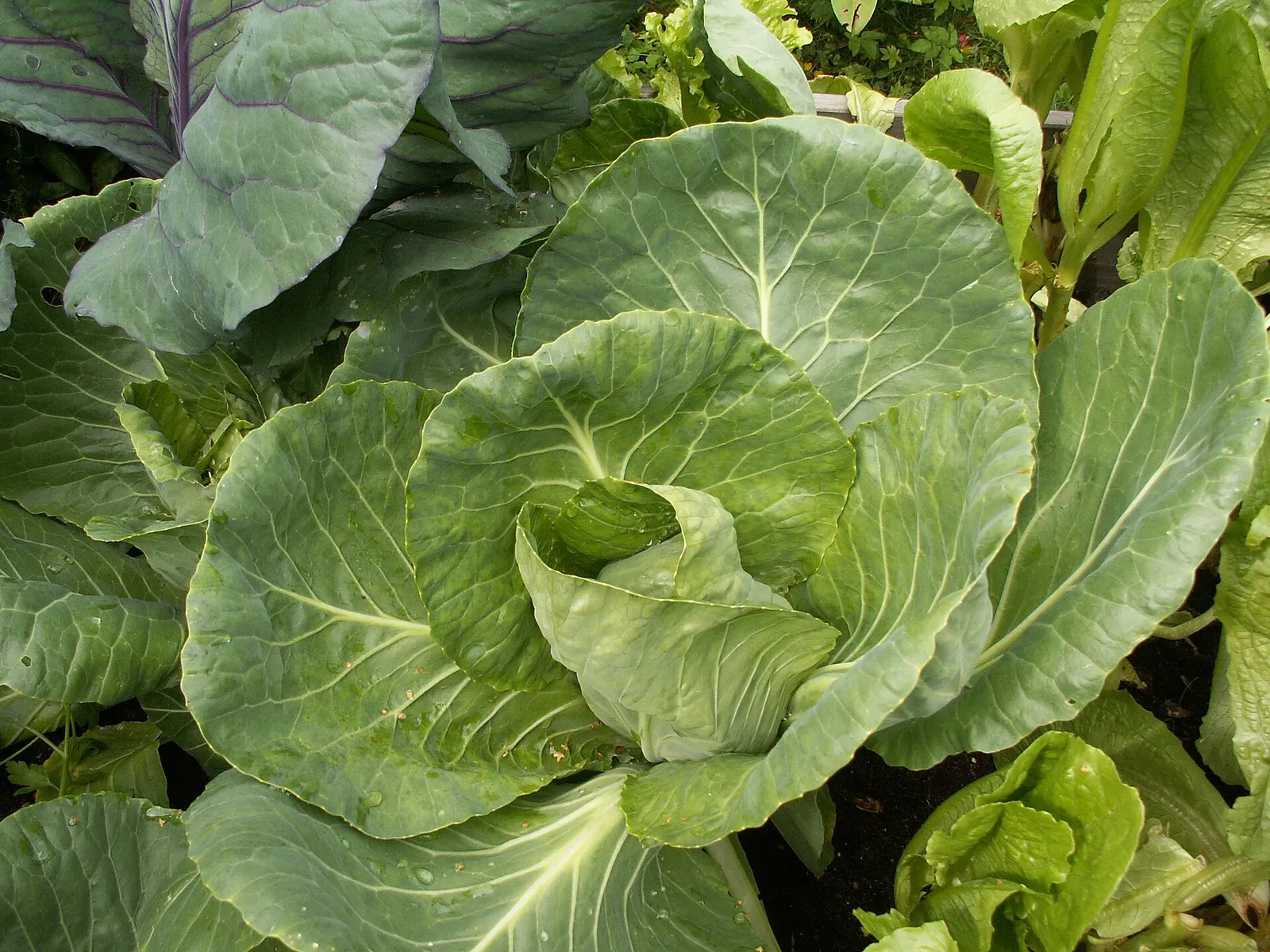
Set cabbage transplants out 2 to 4 weeks before the last spring frost, once soil reaches about 45 F. For a fall crop, plant transplants 6 to 8 weeks before the first fall frost. Cabbage matures in 60 to 100 days.
Days to maturity
70–100days
Ready when
Firm head that resists squeezing
The short answer
Set cabbage transplants out 2 to 4 weeks before your last spring frost, once soil reaches about 45 F. Hardened plants shrug off a light frost. For a fall crop, plant transplants 6 to 8 weeks before the first fall frost. Cabbage matures in 60 to 100 days from transplant.
Cabbage is a cool-season crop, which means it grows best in the cool ends of the year, not the heat of summer. You can plant it twice: once in early spring for a summer harvest, and again in mid-to-late summer for a fall harvest. Get the timing right and the heads form firm in cool weather instead of bolting in the heat.
This guide covers when to plant by season and zone, the soil-temperature cue that tells you it is time, and the common mistake of rushing transplants into cold ground.
When to plant cabbage by climate and zone
The rule holds everywhere: plant in the cool shoulders of the season, not the peak of summer. For the spring crop, that means going out 2 to 4 weeks before your last frost date. Utah State Extension and other guides put hardened transplants out in that window because young cabbage takes cold well.
Colder zones reach their last frost later, so they plant later. The windows below are starting points. Watch your own frost dates and soil temperature.
| Region / zone | Spring transplants | Fall transplants |
|---|---|---|
| Cold (zones 3–5) | Late April – May | Late June – July |
| Temperate (zones 6–7) | March – April | July – early Aug |
| Mild (zones 8–9) | Feb – March | Aug – Sept (plus winter crop) |
Illinois Extension frames the two crops plainly: an early crop set out in spring, and a late crop that must be started during the heat of mid-summer so it heads up in the cooling weather of fall. Shift earlier as you go south and milder, later as you go north and colder.
How to tell it is time to plant
Soil temperature is the real signal, not the calendar. Cabbage germinates and roots best once the ground warms, and cold mud just stalls a transplant.
Run down this checklist before you plant in spring:
- Soil has warmed to at least 45 F at planting depth.
- You are inside 2 to 4 weeks of your last frost date.
- Transplants are 4 to 6 weeks old and hardened off.
- Daytime temperatures are consistently above 40 F so hardening can start.
- The bed drains, since cabbage dislikes waterlogged roots.
- For a fall crop, the calendar is 6 to 8 weeks before your first fall frost.
Cabbage seed germinates over a wide range, roughly 45 to 85 F, with about 40 F as the floor. That is why a few weeks of soil warming makes such a difference for direct-seeded crops.
Pro tip
Cabbage is cold-hardy, which is the whole reason you can plant it weeks before the last frost. Once transplants are hardened off, they take a light frost without damage, and Utah State Extension notes established plants tolerate temperatures down to about 20 F. Harden seedlings off first by setting them outside for a few hours a day over a week before they go in the ground for good.
Spring vs fall planting
Cabbage gives you two shots a year, and the fall crop is often the better one. Spring plantings can get caught by early heat that makes heads split or bolt. Fall plantings finish in cool, steady weather that suits the crop.
For the spring crop, Illinois Extension and Iowa State Extension both start seed indoors 4 to 6 weeks before transplanting, then set hardened plants out a couple weeks before the last frost.
For the fall crop, count back from your first fall frost. Transplants go in 6 to 8 weeks before that date, or start seed 8 to 10 weeks ahead if you are growing your own. UMN Extension keeps it simple for cold climates: for a fall crop, sow seed directly in the garden in early July.
Days to maturity drives the math. Match the variety to the days you have left before frost.
| Cabbage type | Days to maturity (from transplant) | Best season |
|---|---|---|
| Early | 60–75 days | Spring or fall |
| Mid-season | 75–90 days | Spring or fall |
| Late / storage | 90–100 days | Fall |
That 60 to 100 day spread matches the maturity range in our crop data and the extension guides. Early types are your safety net when frost is close. Late storage types want the full fall stretch.
Common mistakes when planting cabbage
The classic error is planting too early into cold soil. A transplant dropped into 40 F mud just sits there, sulks, and can get a check it never recovers from. Wait for soil near 45 F even though the plant itself is frost-hardy.
Common mistake
Two timing errors cost you a crop. Planting too early into cold, wet soil stalls transplants and invites rot, even though cabbage tolerates frost on its leaves. Planting the spring crop too late is just as bad, because heads that try to form in summer heat split, bolt, or turn bitter. Cabbage wants to mature in cool weather, so size your planting date to land harvest in spring or fall, not midsummer.
A second mistake is ignoring days to maturity on the fall crop. If a 95-day late variety goes in only 70 days before a hard freeze, it never heads up. Read the days-to-maturity on the seed packet and count back from frost.
Once your plants are in, spacing decides head size. Crowded cabbage makes small heads, so see how far apart to plant cabbage before you set them out. The payoff for getting all this right is covered in when to harvest cabbage.
Your next step
Plant cabbage in the cool shoulders of the year. Spring transplants go out 2 to 4 weeks before the last frost once soil hits about 45 F, and fall transplants go in 6 to 8 weeks before the first fall frost. Pick a variety whose days to maturity fit the cool window you have.
Laying out the bed next? Read how far apart to plant cabbage and give each plant the room it needs to size up a full head.
Common questions
When should I plant cabbage?
Plant cabbage as a cool-season crop. Set spring transplants out 2 to 4 weeks before your last frost, once soil warms to about 45 F. Hardened plants tolerate light frost. For a fall crop, plant transplants 6 to 8 weeks before the first fall frost so heads form in cool weather.
Can cabbage survive frost?
Yes. Hardened cabbage transplants handle light frost, and Utah State Extension notes established plants tolerate temperatures down to about 20 F. That cold tolerance is why cabbage is planted early in spring and grown into fall. Tender seedlings straight from indoors need hardening off first.
How long does cabbage take to grow?
Cabbage matures in about 60 to 100 days from transplant, depending on the variety. Early types finish in roughly 60 to 75 days, late storage types take 90 to 100 days. Direct-seeded cabbage adds a few weeks since it starts from seed rather than a 4 to 6 week-old plant.
Is October too late to plant cabbage?
In most of the US, yes, for an outdoor crop. Cabbage needs 60 to 100 days to head up, so October planting runs into hard freezes before harvest in cold and temperate zones. In mild winter areas (zones 8 to 9), fall and early-winter transplants can still produce.
Should I start cabbage from seed or buy transplants?
Both work. Transplants are simpler and get you to harvest faster. To grow your own, start seed indoors 4 to 6 weeks before transplanting, per Illinois and Iowa State Extension. For a fall crop, many gardeners direct sow in mid-summer or start seed 8 to 10 weeks before the first frost.
Sources
Agronomic claims in this guide are checked against these primary sources.
- Cabbage | Home Vegetable Gardening — University of Illinois Extension
- Growing cabbage in home gardens — University of Minnesota Extension
- Growing Cabbage in the Home Garden — Iowa State University Extension
- Cabbage in the Garden — Utah State University Extension
Keep reading
When to Harvest Cabbage (Signs It's Ready)
Cabbage is ready about 70 to 100 days after transplanting, when the head feels firm and solid as you squeeze it and has reached full size for the variety. Cut it before it splits.
Read →When to Harvest Broccoli (Signs It's Ready)
Broccoli is ready about 60 to 90 days after planting, when the central head is 4 to 7 inches across with tight, dark-green buds, before any open to yellow. Here are the cues, the cut, and the weeks of side shoots that follow.
Read →When to Plant Onions (Spring Timing by Zone)
Plant onions as early as the soil can be worked in spring, about 2 to 4 weeks before your last frost, once soil hits 50 F. In the Deep South, short-day onions go in during fall instead. Match the onion type to your latitude.
Read →When to Plant Zucchini (Frost + Soil Temp Timing)
Plant zucchini after your last spring frost, once the soil hits at least 60 F (ideally 65 to 70 F). Direct-sow seeds 1/2 to 1 inch deep, or set out transplants started 2 to 4 weeks earlier. Warm zones get a second fall crop.
Read →When to Plant Tomatoes (Frost + Soil Temp by Zone)
Set tomato transplants out 1 to 2 weeks after your last spring frost, once soil hits at least 60 F. Start seeds indoors 6 to 8 weeks before that frost date. Cold soil stalls them, so wait for warmth.
Read →When to Plant Swiss Chard (Spring and Fall Timing)
Plant swiss chard 2 to 4 weeks before your last spring frost, once the soil hits 40°F. Sow again 3 to 4 weeks before the first fall frost. Seeds go half an inch to an inch deep.
Read →