Harvest guide
When to Harvest Beets (Size + Signs)
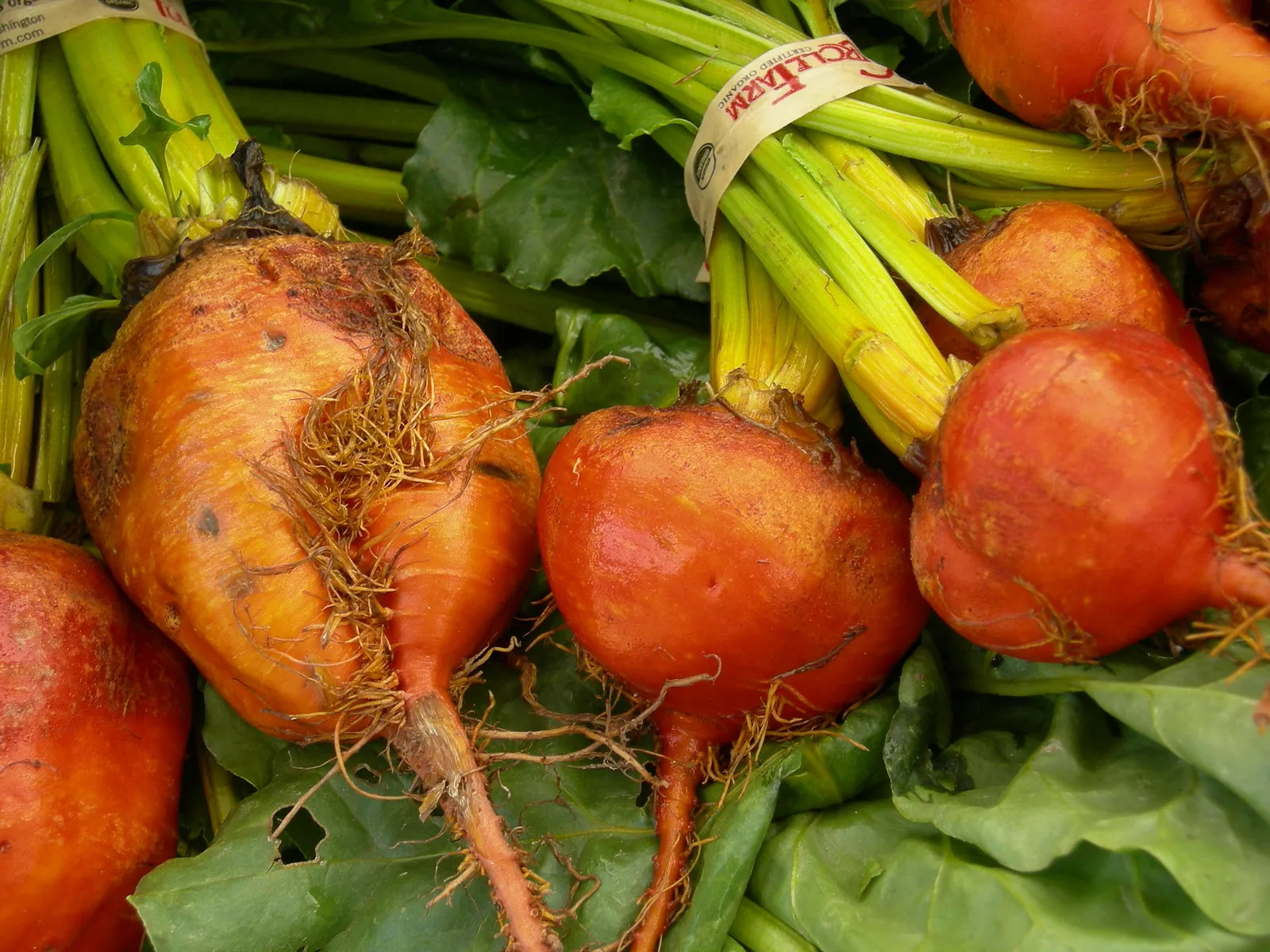
Beets are ready about 50 to 70 days after sowing, when the root shoulder is roughly 1.5 to 3 inches across at the soil line. Here are the size cues, the lift-and-twist method, and how to store the roots and the greens.
Days to maturity
50–70days
Ready when
Shoulders 1.5-3in across at soil line
The short answer
Beets are ready about 50 to 70 days after sowing, when the root shoulder is roughly 1.5 to 3 inches across at the soil line. Pull at 1.5 to 2 inches for tender beets. Bigger than 3 inches can turn woody. The greens are edible the whole time, so thin the row and eat them young.
The harvest window above comes from the days-to-maturity range for beets. The rest of this guide is how to read the cues, lift them clean, and keep both the roots and the tops.
Size and timing at a glance
Beets give you two crops from one planting. The root sizes up on a clock, and the greens are good from the day they sprout.
Iowa State Extension puts the full crop at 50 to 70 days from planting, with roots ready once they reach 1 inch in diameter and the main crop pulled at 1.5 to 3 inches. Illinois Extension notes it takes about 60 days for a beet to reach 1.5 inches across.
| What you want | Root size at the soil line | When |
|---|---|---|
| Baby beets (tender) | 1–2 inches across | From about 50 days |
| Standard beets | 1.5–3 inches across | Around 55–70 days |
| Greens only | Any root size | Anytime, leaves 6–8 in long |
Use these as windows, not deadlines. Your seed packet's day count is the start of the range, not the finish.
How to tell they're ready
The calendar gets you close. The shoulder tells you the truth.
Check two things before you commit the whole row:
- Shoulder diameter at the soil line. Brush soil off the top of one root and look at the crown. The shoulder usually pushes up out of the ground, so you can often read it without digging. About 1.5 to 3 inches across is the standard ready zone, and 1.5 to 2 inches is the sweet spot for tender beets.
- Days since sowing. Count from when you sowed. Once you are past 50 days and the shoulder is sizing, start pulling. Iowa State Extension says roots can come out as small as 1 inch if you want baby beets.
Still not sure? Pull one. If the shoulder is in range and the root feels firm, the rest of the row is close behind.
How to harvest beets
Beet roots come up easier than carrots, but the taproot still grips. Loosen before you lift so you do not snap the tops off.
- Loosen the soil first. Push a garden fork into the soil a few inches out from the row and rock it back to free the roots.
- Lift gently. Grip the base of the leaves and pull straight up. Once the soil is loose, the root slides out.
- Twist off the tops. Twist or cut the greens off and leave about 1 inch of stem on the root. Leaving that inch keeps the beet from bleeding out its color and juice. Utah State Extension trims foliage at harvest, and Iowa State trims tops to within 1/2 to 1 inch of the root.
Work along the row a section at a time. You can stagger the pull over a couple of weeks and let the smaller roots keep sizing.
Greens and storage
You get two foods here. Treat them differently.
The greens. Cut them and use them fresh, like spinach. Iowa State Extension says you can snip leaves once the root is 1 inch across and take up to 1/3 of the foliage without hurting the plant, harvesting when leaves are about 6 to 8 inches long. The thinnings you pull to space the row are greens too.
The roots. Store them cold and humid with the tops off. Iowa State holds beets at about 32°F and high humidity for up to 3 to 4 months, with foliage trimmed to within 1/2 to 1 inch. A refrigerator crisper drawer works for shorter runs. Keep the greens out of the bag with the roots, since the leaves pull moisture from the beet and leave it shriveled.
Common mistake
Two things spoil a beet harvest. Letting them oversize turns the root woody. Iowa State Extension says beets over 3 inches across are often tough and fibrous, so pull them before they balloon. Cutting the tops too close makes the beet bleed out its color and juice in the pot. Leave about 1 inch of stem on the root and do not cut into the crown.
Pro tip
Do not throw out the thinnings. When you space the row, the small plants you pull come with tender young greens and sometimes a marble-sized root. Wash them and cook them like spinach. You are eating the crop weeks before the main harvest, and the row that is left sizes up cleaner with the room.
Get the spacing right next year
Most beet problems start at sowing. Crowded beets compete and stay small, and they never push a clean shoulder up to the soil line, so they read as "not ready" when they are just starved for room.
The fix is spacing. Thin beets to about 3 to 4 inches apart in the row so each root has room to size up. The plant spacing chart has the full crop list, and the Plant Spacing Calculator shows how many fit your bed.
Try it — Plant Spacing Calculator
Full calculatorExtra to cover losses (10% is typical).
You can plant
32plants
- Per row
- 8
- Rows
- 4
- Buy (incl. spare)
- 36 plants
Beets are one root crop in a rhythm. The same lift-and-loosen rule applies in when to harvest carrots, the fast cousins in when to harvest radishes, and if you came for the tops, when to harvest spinach covers cut-and-come-again greens.
Your next step
Beets are ready when the shoulder reaches about 1.5 to 3 inches at the soil line, somewhere in the 50 to 70 day window. Pull at 1.5 to 2 inches for tender roots, loosen with a fork, twist the tops off leaving an inch, and store cold and humid. Eat the greens and thinnings the whole way through.
Planting the next round? Open the Plant Spacing Calculator and set your beets at 3 to 4 inches so they size up clean.
Common questions
How do I know when beets are ready to pick?
Brush the soil off the top of a root and check the shoulder, the widest part at the crown. Most beets are ready when that shoulder is about 1.5 to 3 inches across, which lands around 50 to 70 days after sowing. Iowa State Extension says you can start pulling once roots reach 1 inch in diameter for tender baby beets. If you are not sure, pull one and check it.
Can you leave beets in the ground too long?
Yes. Iowa State Extension says beets larger than 3 inches in diameter are often tough and fibrous. The flavor sweetens as they grow, but the texture gets woody. Pull them in the 1.5 to 3 inch window. Heat and dry soil make woodiness worse, so Utah State Extension recommends keeping plants well-watered when temperatures climb above 85°F.
Are beet greens edible, and when do I pick them?
Yes. The greens are edible the whole time and cook up like spinach. Iowa State Extension says you can snip leaves once the root reaches 1 inch across, taking up to 1/3 of the foliage without hurting the plant. Harvest the leaves when they are about 6 to 8 inches long. The thinnings you pull to space the row are good greens too.
Why are my beets woody or tough?
Two common causes. First, size. Iowa State Extension says roots over 3 inches across turn fibrous, so pull them before they oversize. Second, stress. Utah State Extension notes that hot weather and dry soil cause woody bulbs, so water steadily once temperatures pass 85°F.
How long do harvested beets keep?
Trim the tops to within about 1/2 to 1 inch of the root and store cold and humid. Iowa State Extension holds beets at about 32°F and high humidity for up to 3 to 4 months. Leave the tops on and the greens wick moisture out of the root, so cut them off and store the greens separately for fresh use.
Sources
Agronomic claims in this guide are checked against these primary sources.
- Growing Beets in the Home Garden — Iowa State University Extension and Outreach
- When should I harvest beets? — Iowa State University Extension and Outreach
- Beet — University of Illinois Extension
- How to Grow Beets in Your Garden — Utah State University Extension
Keep reading
When to Harvest Carrots (Signs They're Ready)
Carrots are ready about 50 to 80 days after sowing, when the shoulder is roughly 1/2 to 3/4 inch across at the soil line. Here are the cues, the lift-don't-yank method, and how to store them.
Read →When to Harvest Radishes (Signs They're Ready)
Salad radishes are ready fast, about 22 to 35 days after sowing, when the root is roughly 1 inch across at the soil line. Pull promptly, check the shoulder, and learn how daikon and winter types differ.
Read →When to Harvest Spinach (Signs It's Ready)
Spinach is ready about 37 to 50 days after sowing, once a plant has five or six leaves that are 3 to 6 inches long. Pick the outer leaves or cut the whole plant above the crown, and harvest before it bolts in heat.
Read →When to Plant Zucchini (Frost + Soil Temp Timing)
Plant zucchini after your last spring frost, once the soil hits at least 60 F (ideally 65 to 70 F). Direct-sow seeds 1/2 to 1 inch deep, or set out transplants started 2 to 4 weeks earlier. Warm zones get a second fall crop.
Read →When to Plant Tomatoes (Frost + Soil Temp by Zone)
Set tomato transplants out 1 to 2 weeks after your last spring frost, once soil hits at least 60 F. Start seeds indoors 6 to 8 weeks before that frost date. Cold soil stalls them, so wait for warmth.
Read →When to Plant Swiss Chard (Spring and Fall Timing)
Plant swiss chard 2 to 4 weeks before your last spring frost, once the soil hits 40°F. Sow again 3 to 4 weeks before the first fall frost. Seeds go half an inch to an inch deep.
Read →