Harvest guide
When to Harvest Butternut Squash (Signs It's Ready)
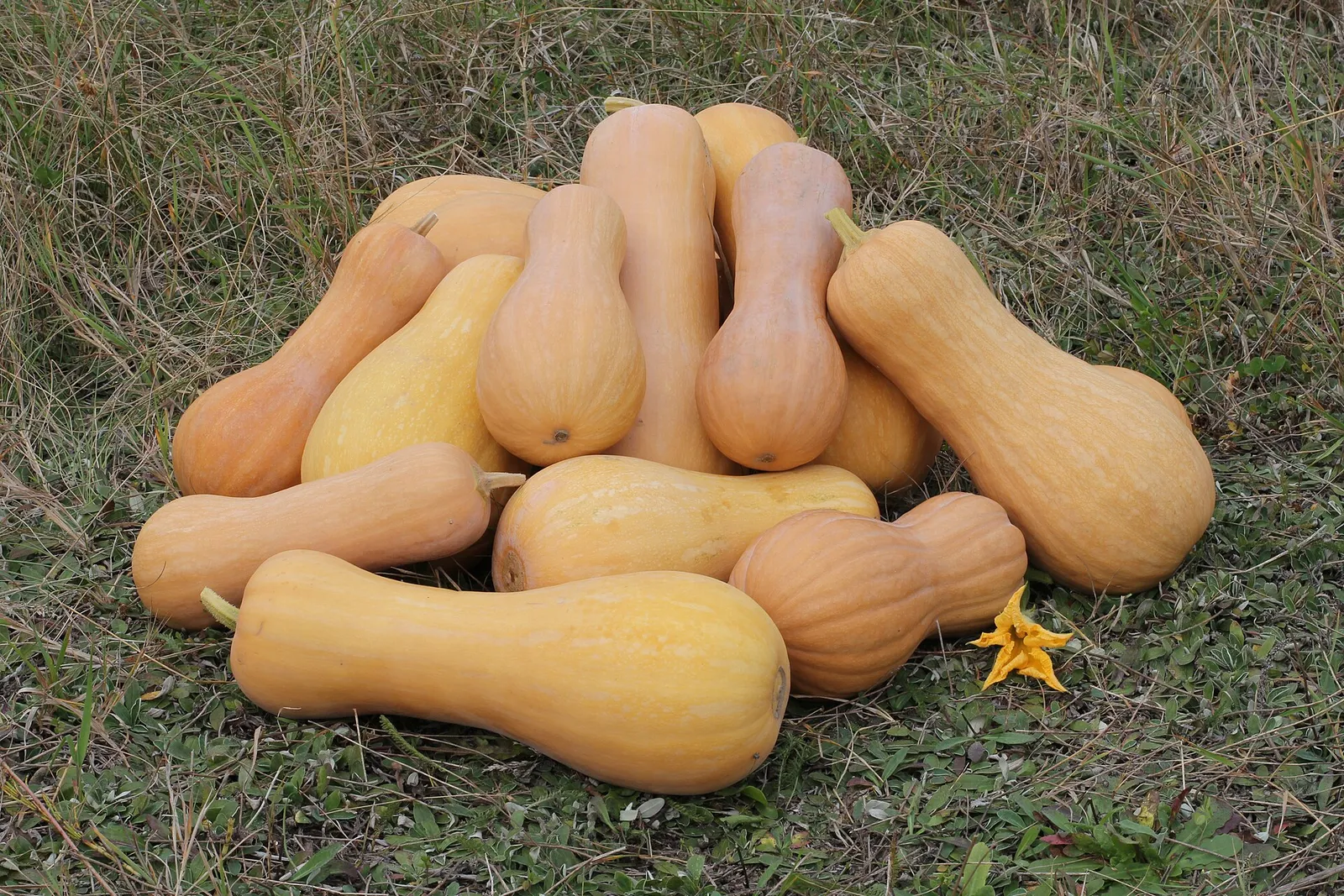
Butternut squash is ready about 100 to 110 days from planting, when the rind turns deep tan, hardens past a thumbnail, and the stem goes corky and dry.
Days to maturity
100–110days
Ready when
Hard tan rind, dry stem, sounds hollow
The short answer
Butternut squash is ready about 100 to 110 days from planting, when the rind turns a deep, uniform tan and hardens so a thumbnail won't pierce it. The stem should be corky and dry. Harvest before a hard frost, and cut the squash off the vine with 1 to 2 inches of stem left on.
Days to maturity and ripeness signs
Butternut needs a long, warm season. Most varieties hit maturity around 100 to 110 days after planting, so count from your seeding date and start checking the rind as you near it.
The calendar is a guide, not the rule. The rind tells the real story. Iowa State Extension says a squash is ready when "the skin is hard (can't be punctured with the thumbnail) and uniformly tan in color."
| Stage | Rind color | Rind hardness | Stem |
|---|---|---|---|
| Immature | Pale tan, glossy | Thumbnail dents it | Green, soft |
| Nearly ready | Tan, dulling sheen | Firm but yielding | Starting to dry |
| Ready to harvest | Deep, uniform tan | Thumbnail won't pierce | Corky, dry |
A green or pale squash is not done. Alabama Extension warns that dead vines do not signal maturity either, since vines can die early from disease while the fruit is still immature. Trust the rind and stem, not the leaves.
How to tell it's ready
Run through this short checklist before you cut. The squash should pass all four.
- Uniform tan color. The whole rind is deep tan with no green streaks, and the shine has gone dull and dry.
- Hard rind. Press a thumbnail into the skin near the stem. A ripe rind resists and will not break.
- Dry, corky stem. The stem where it meets the fruit looks brown, dry, and corky, not green and fleshy.
- Hollow sound. Tap the squash. A ripe one sounds hollow, the way a ripe melon does.
If the rind still dents or the stem is green, give it another week or two on the vine and check again.
How to harvest
Cut, don't pull. Yanking a squash off the vine tears the stem out, and a torn stem opens the fruit to rot.
Use a sharp knife or pruning shears. Iowa State Extension says to "cut the fruit off the vine with a pruning shears" and "leave a 1 inch stem on each fruit." A little extra is fine, so aim for 1 to 2 inches of stem.
That stub of stem is a seal, not a handle. Never carry the squash by the stem. Alabama Extension is blunt about it: hold the fruit "like a ball and not by their stems." If the stem snaps off, the scar invites rot and the squash will not keep.
Wear gloves and handle each fruit gently. Cuts and bruises become soft spots in storage, so set them down, don't drop them.
Curing and storage
Curing hardens the rind and heals small nicks before long storage. It is the step that decides whether your squash lasts a month or several.
Cure the harvested squash for about 10 days at 80 to 85°F in a dry, well-ventilated spot out of direct sun. University of Vermont Extension puts the window at five to 10 days and notes the temperature should stay "above 60°F, ideally 80 to 85°F." This warm rest sets the skin and starts converting starch to sugar, so the squash tastes better too.
After curing, move the squash to long-term storage at 50 to 55°F in a cool, dry, well-ventilated place. At that temperature, butternut keeps 2 to 3 months, per Iowa State Extension, and University of Vermont Extension reports up to 3 to 4 months under good conditions.
One storage rule matters: keep the squash away from apples, pears, and ripening tomatoes. Those fruits give off ethylene gas, which makes squash spoil faster.
Common mistake
Three mistakes cost the most squash. Harvesting green or immature fruit, before the rind hardens and turns tan, leaves you with bland squash that rots fast. Breaking off the stem, by pulling instead of cutting or carrying by the stem, opens a wound that invites rot. And leaving fruit out through a hard frost causes cold injury that shows up as soft, mushy spots weeks later in storage. Cut clean, cure warm, and beat the freeze.
Pro tip
A short fingernail makes the thumbnail test tricky, so use a second check. Tap the squash and listen for a hollow ring, the way you would thump a watermelon. A ripe butternut sounds hollow and firm. A dull, solid thud usually means it needs more time on the vine.
FAQs
How do you know when butternut squash is ripe? The rind turns a uniform deep tan and loses its glossy sheen. Press a thumbnail near the stem, and if it will not pierce the skin, the squash is ripe. The stem should be dry and corky, not green.
Will butternut squash ripen after picking? A mature squash improves a little off the vine, but a truly green one will not turn good. Pick only fruit that already passes the thumbnail test, then let curing finish the job.
Can you harvest butternut squash after a frost? Harvest before a hard frost, not after. A hard freeze causes cold injury that shows up as soft spots and rot in storage. If frost is forecast, bring the squash in.
How long does butternut squash last in storage? Cured and stored at 50 to 55°F in a dry, ventilated spot, it keeps about 2 to 3 months. Keep it away from apples and pears, which speed spoilage.
Do you have to cure butternut squash? Curing is not strictly required, but it helps. Holding the squash at 80 to 85°F for about 10 days hardens the rind and heals small nicks, so fewer fruit rot later.
What to do next
Harvest when the rind is deep tan and thumbnail-hard, the stem is corky and dry, and a hard frost is still off. Cut with 1 to 2 inches of stem, cure warm, then store cool.
If you grow other storage crops, the same timing care applies. Read when to harvest pumpkins for the closely related winter-squash signs, or when to harvest sweet potatoes for a root crop on a similar fall schedule.
Planning next year's beds? Butternut vines need room. Set your spacing with the Plant Spacing Calculator so the fruit has space to size up.
How many plants fit your bed
When you replant, size the bed first. Run your dimensions through the calculator to see how many plants fit in square, triangular, and square-foot layouts.
Try it — Plant Spacing Calculator
Full calculatorExtra to cover losses (10% is typical).
You can plant
32plants
- Per row
- 8
- Rows
- 4
- Buy (incl. spare)
- 36 plants
Common questions
How do you know when butternut squash is ripe?
The rind turns a uniform deep tan and loses its glossy sheen. Press a thumbnail into the skin near the stem. If it will not pierce the rind, the squash is ripe. The stem should be dry and corky, not green. Iowa State Extension uses the hard, thumbnail-resistant, uniformly tan rind as the main ripeness test.
Will butternut squash ripen after picking?
The rind color and sweetness improve a little off the vine if the squash is mature, but a truly green, immature squash will not turn good. The skin hardness and tan color need to set on the vine first. Pick only fruit that already passes the thumbnail test, then let curing finish the job.
Can you harvest butternut squash after a frost?
Harvest before a hard frost, not after. A light frost can nip the leaves without ruining the fruit, but a hard freeze causes cold injury to the squash that shows up as soft spots and rot in storage. If frost is in the forecast, bring the squash in.
How long does butternut squash last in storage?
Properly cured and stored at 50 to 55°F in a dry, well-ventilated spot, butternut squash keeps about 2 to 3 months, per Iowa State Extension. University of Vermont Extension reports up to 3 to 4 months under good conditions. Keep it away from apples and pears, which release ethylene and speed spoilage.
Do you have to cure butternut squash?
Curing is not strictly required for butternut, but it helps. Holding the squash at 80 to 85°F for about 10 days hardens the rind and heals small nicks, which means fewer rotten fruit later. After curing, move it to a cool 50 to 55°F spot for long storage.
Sources
Agronomic claims in this guide are checked against these primary sources.
- When should I harvest butternut squash? — Iowa State University Extension and Outreach
- What is the proper way to harvest and store winter squash? — Iowa State University Extension and Outreach
- Pumpkin and Squash Harvest and Storage — University of Vermont Extension
- Harvesting, Curing, and Post Harvest Care of Pumpkins and Winter Squash — Alabama Cooperative Extension System
Keep reading
When to Harvest Pumpkins (Signs They're Ready)
Pumpkins are ready about 90 to 120 days from planting, when the color is deep and even, the rind shrugs off a thumbnail, and the stem turns hard and woody.
Read →When to Harvest Sweet Potatoes (Signs They're Ready)
Sweet potatoes are ready about 90 to 120 days after transplanting, before the first fall frost. Dig when the vines yellow, then cure before you eat them.
Read →When to Harvest Potatoes (Signs They're Ready)
Dig new potatoes around flowering, about 6 to 8 weeks after planting. Wait for maincrop potatoes until the tops die back and the skin sets, roughly 90 to 120 days.
Read →When to Plant Zucchini (Frost + Soil Temp Timing)
Plant zucchini after your last spring frost, once the soil hits at least 60 F (ideally 65 to 70 F). Direct-sow seeds 1/2 to 1 inch deep, or set out transplants started 2 to 4 weeks earlier. Warm zones get a second fall crop.
Read →When to Plant Tomatoes (Frost + Soil Temp by Zone)
Set tomato transplants out 1 to 2 weeks after your last spring frost, once soil hits at least 60 F. Start seeds indoors 6 to 8 weeks before that frost date. Cold soil stalls them, so wait for warmth.
Read →When to Plant Swiss Chard (Spring and Fall Timing)
Plant swiss chard 2 to 4 weeks before your last spring frost, once the soil hits 40°F. Sow again 3 to 4 weeks before the first fall frost. Seeds go half an inch to an inch deep.
Read →