Harvest guide
When to Harvest Peppers (Green vs Ripe)
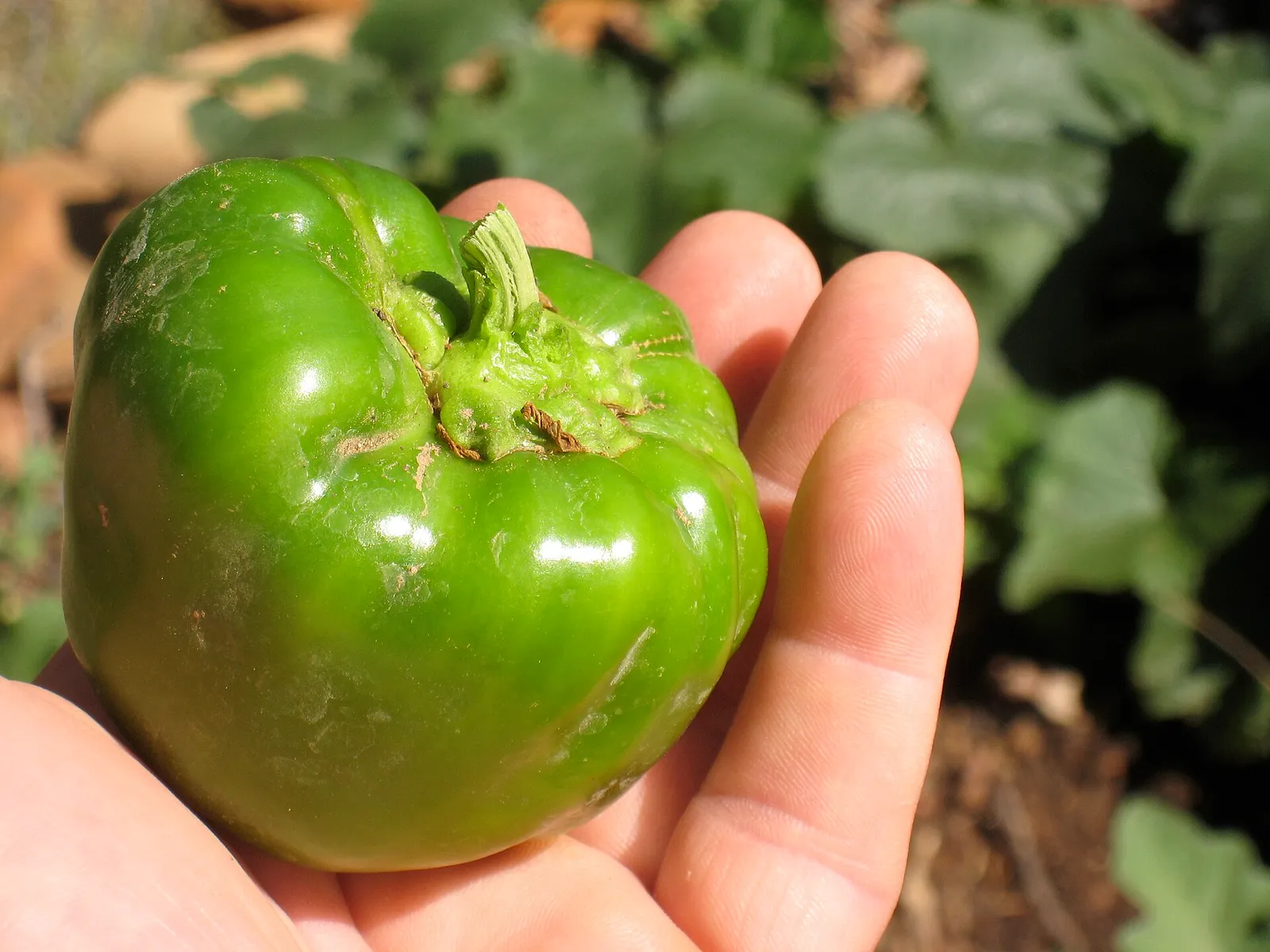
Bell peppers are full size and firm at green stage around 60 to 70 days, and fully ripe in red, yellow, or orange around 80 to 90 days. Here are the cues, the cut-don't-pull method, and the green-versus-ripe trade-off.
Days to maturity
60–90days
Ready when
Full size and color; firm and glossy
The short answer
Bell peppers are ready at the green stage when they hit full size and feel firm, around 60 to 70 days after transplanting. Leave them on and they ripen to red, yellow, or orange around 80 to 90 days, sweeter but fewer. Hot peppers are usually best left to ripen to full color. Cut, don't pull, and leave a short stem.
The window above comes from the days-to-maturity range for peppers. The rest of this guide is how to read green versus ripe, cut them clean, and decide which way to play it.
Days to maturity by type
A pepper has two harvest points, not one. The green stage comes first, when the fruit is full size and firm. Full color comes later, after the same fruit sits on the plant and ripens.
UMN Extension puts the harvest window at about 70 to 85 days after transplanting, and longer from seed. WVU Extension adds that a fruit takes 35 to 45 days to go from flowering to full color, which is the extra wait the color stage costs you.
| Pepper type | Green stage | Fully colored | Notes |
|---|---|---|---|
| Bell / sweet | 60–70 days | 80–90 days | Pick green for yield, ripen for sweetness |
| Sweet (banana, wax) | 60–70 days | 75–85 days | Often eaten yellow, not fully red |
| Hot (jalapeno, cayenne) | 60–80 days | 80–95 days | Usually best left to ripen, hottest at full color |
Treat these as windows, not deadlines. Warmth, variety, and how often you pick all shift them. Your seed packet's day count is the start of the green stage, not the finish.
How to tell they're ready
The calendar gets you close. The fruit tells you the truth. Check three things before you cut.
- Full size. The pepper should look done for its variety. Illinois Extension picks green bells at 3 to 4 inches long. A pepper that is still small and lengthening is not ready.
- Firm walls. Squeeze gently. A ready pepper feels firm and solid, not soft or thin-walled. WVU Extension says peppers should be firm, plump, and smooth-skinned for best quality.
- Color, for the ripe stage. If you are after a colored pepper, wait for full, even color. A pepper that is half green and half red will keep ripening off the plant, but it is sweeter if you let it finish on the stem.
For green peppers, full size plus firm walls is the whole test. Color does not matter, because you are picking before it changes.
How to harvest peppers
Do not yank a pepper off. Pepper branches are brittle and snap easily, so pulling a fruit can rip a whole limb off the plant and cost you every pepper that was growing on it.
Cut them instead.
- Use pruners or a sharp knife. UMN Extension harvests peppers by clipping the stem with shears. A clean cut beats a tear every time.
- Leave a short stem. Cut the stem just above the pepper so a small stub stays on the fruit. The stem helps the pepper hold moisture and keeps the cut clean.
- Support the branch. Hold the limb steady with one hand while you cut with the other. That keeps the brittle stem from snapping as you work.
Harvest often once the plants start. As you pick, the plant keeps flowering and setting more fruit, so regular cutting keeps the crop coming.
Green vs fully ripe
This is the real decision with peppers, and there is no single right answer.
Pick green and you get more peppers. Each fruit you cut frees the plant to set another, so a plant picked at green stage puts out more total pounds over the season.
Wait for full color and you get sweeter, better fruit. Clemson Extension states plainly that fully colored peppers are sweeter than green peppers. Red, yellow, and orange bells also carry more vitamin C than the same pepper picked green. The cost is yield, since each pepper ties up the plant for the extra 35 to 45 days it takes to color up.
The honest answer is to do both. Pick some green so the plant keeps producing, and let some ripen on the stem for flavor.
Common mistake
Two habits ruin a pepper harvest. Pulling instead of cutting snaps the brittle branch and takes the whole limb's crop with it, so always cut and leave a stub. And leaving ripe peppers on too long lets them go soft and wrinkled and stalls the plant, since a plant loaded with finished fruit slows down on setting new flowers. Cut colored peppers as soon as they finish.
Handling hot peppers
Hot peppers follow the same cut-don't-pull rule, with one extra step. Most are best left to ripen to full color, which is when they are both fully flavored and at their hottest. Clemson Extension harvests jalapenos when the fruit turns a deep black-green, and ripens many other hot types to red.
Pro tip
Wear gloves when you pick and handle hot peppers. The capsaicin oil that makes them hot transfers straight to your skin and stays there, so it can burn your eyes or lips hours later even after you wash your hands. Cut the peppers, keep them out of your face, and wash the knife and board when you are done.
Get the spacing right next year
Crowded pepper plants shade each other, set less fruit, and trap the damp air that invites disease. Plants with room ripen more fruit and dry out faster after rain.
Give peppers about 18 inches apart in rows roughly 2 to 3 feet apart, or one to two plants per square foot in a raised bed. The Plant Spacing Calculator shows how many fit your bed at that spacing.
Try it — Plant Spacing Calculator
Full calculatorExtra to cover losses (10% is typical).
You can plant
32plants
- Per row
- 8
- Rows
- 4
- Buy (incl. spare)
- 36 plants
Peppers ripen alongside the rest of the summer crop. The same color-versus-yield call shows up in when to harvest tomatoes, and the cut-don't-pull habit carries over to when to harvest cucumbers.
Your next step
Bell peppers are ready green at full size and firm walls, around 60 to 70 days, and fully colored around 80 to 90 days. Cut them with pruners, leave a short stem, and decide fruit by fruit whether you want more peppers or sweeter ones. Wear gloves for the hot ones.
Planning next year's bed? Open the Plant Spacing Calculator and set your peppers at 18 inches so each plant has room to ripen a full crop.
Common questions
When are peppers ready to pick?
Bell peppers are ready at the green stage when they reach full size and the walls feel firm, which lands around 60 to 70 days after transplanting. Illinois Extension picks green bells at 3 to 4 inches long, firm, and green. Leave them on another two to three weeks and they ripen to red, yellow, or orange. UMN Extension puts the full harvest window at about 70 to 85 days from transplant.
Are green peppers just unripe red peppers?
Often, yes. A green bell is the immature stage of a pepper that would turn red, yellow, or orange if left on the plant. It is fully edible green. Clemson Extension notes that fully colored peppers are sweeter than green ones, so the color change is a flavor change, not a sign you waited too long. Some varieties are bred to eat green.
Should I pick peppers green or wait for color?
It is a trade-off. Picking green gives you more total peppers, because the plant keeps setting fruit as you harvest. Waiting for full color gives you sweeter peppers but fewer of them, since each one ties up the plant for an extra two to three weeks. Pick some green and let some ripen.
Do you cut or pull peppers off the plant?
Cut them. Pepper stems are brittle and the branches snap easily, so yanking a fruit can tear off a whole limb. Clemson Extension says to cut the stems instead of pulling. Use pruners or a sharp knife and leave a short stub of stem on each pepper.
How do you harvest hot peppers?
Most hot peppers are best left to ripen to full color, which is also when they are hottest. Clemson Extension harvests jalapenos when the fruit turns a deep black-green, and ripens many others to red. Cut them like sweet peppers and wear gloves, since the oils stay on your skin and burn.
Sources
Agronomic claims in this guide are checked against these primary sources.
- Growing peppers — University of Minnesota Extension
- Peppers — University of Illinois Extension
- Pepper — Clemson Cooperative Extension Home & Garden Information Center
- Growing Peppers — West Virginia University Extension
Keep reading
When to Harvest Tomatoes (Signs They're Ready)
Tomatoes are ready about 60 to 85 days after transplant, when they are fully colored and give slightly to a gentle squeeze. Here are the cues, the twist-or-cut method, and how to ripen the rest on the counter.
Read →When to Harvest Cucumbers (Size + Signs)
Cucumbers are ready about 50 to 70 days after planting, when they are firm and evenly green at the right size for the type. Slicers want 6 to 8 inches, picklers 2 to 4. Pick every day or two before they yellow and turn bitter.
Read →When to Harvest Zucchini (Best Size + Signs)
Zucchini is ready about 45 to 65 days after planting, best picked young at 6 to 8 inches long and about 2 inches thick, when the skin is glossy and a thumbnail dents it easily. Here are the size cues, the cut-don't-pull method, and why you check daily.
Read →When to Plant Zucchini (Frost + Soil Temp Timing)
Plant zucchini after your last spring frost, once the soil hits at least 60 F (ideally 65 to 70 F). Direct-sow seeds 1/2 to 1 inch deep, or set out transplants started 2 to 4 weeks earlier. Warm zones get a second fall crop.
Read →When to Plant Tomatoes (Frost + Soil Temp by Zone)
Set tomato transplants out 1 to 2 weeks after your last spring frost, once soil hits at least 60 F. Start seeds indoors 6 to 8 weeks before that frost date. Cold soil stalls them, so wait for warmth.
Read →When to Plant Swiss Chard (Spring and Fall Timing)
Plant swiss chard 2 to 4 weeks before your last spring frost, once the soil hits 40°F. Sow again 3 to 4 weeks before the first fall frost. Seeds go half an inch to an inch deep.
Read →