Harvest guide
When to Harvest Tomatoes (Signs They're Ready)
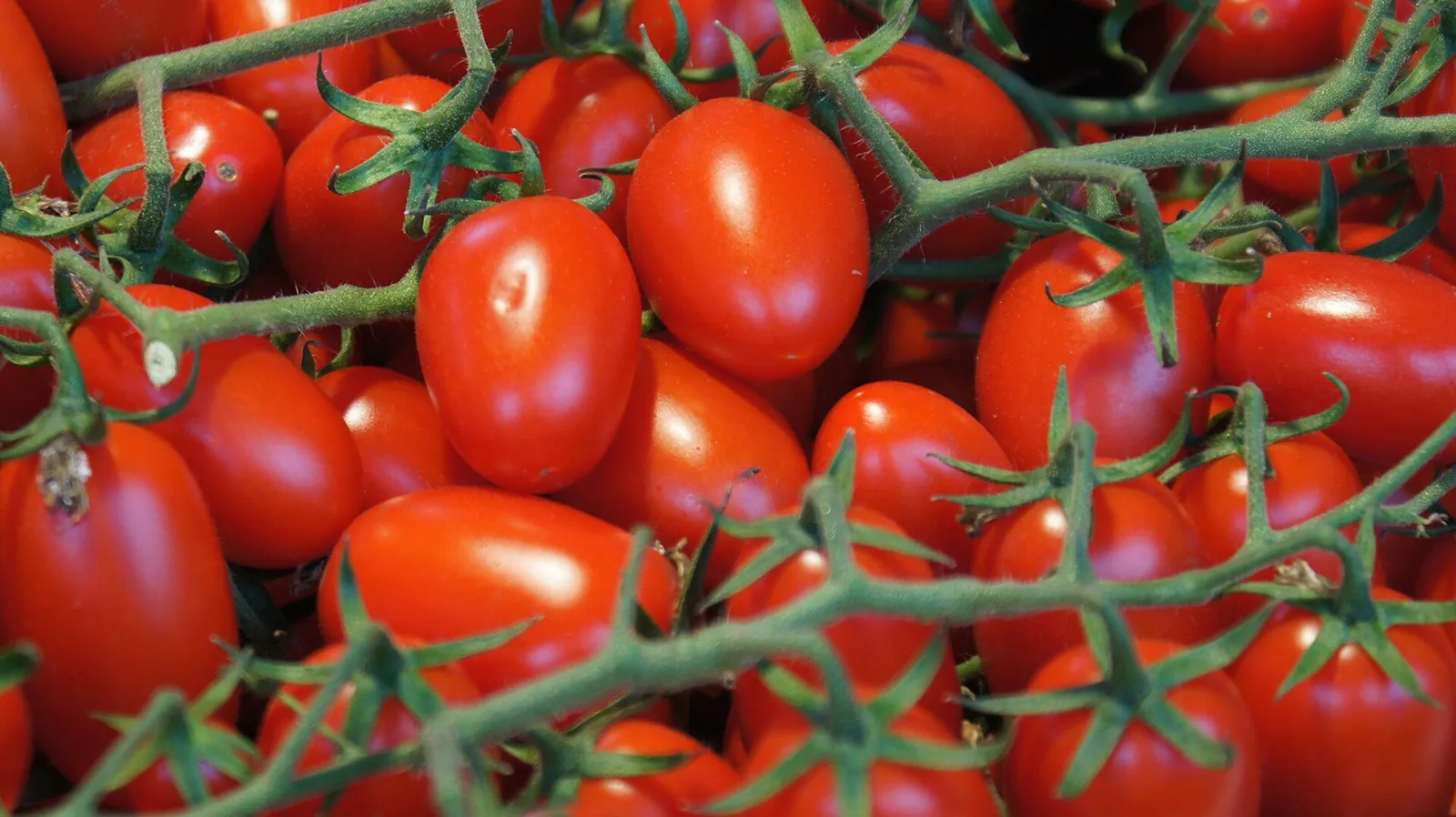
Tomatoes are ready about 60 to 85 days after transplant, when they are fully colored and give slightly to a gentle squeeze. Here are the cues, the twist-or-cut method, and how to ripen the rest on the counter.
Days to maturity
60–85days
Ready when
Full color, slight give when gently squeezed
The short answer
Tomatoes are ready about 60 to 85 days after transplant, when they are fully colored for their variety and give slightly to a gentle squeeze. You can pick at the breaker stage, the first blush of color, and ripen on the counter at about 70°F with no loss of flavor. Pick everything before a hard frost.
The harvest window above comes from the days-to-maturity range for tomatoes. The rest of this guide is how to read the cues, pick clean, and ripen the stragglers.
Days to maturity by type
The "right day" depends on what you planted. Cherry and early types finish fast. Beefsteaks and paste tomatoes take longer.
Clemson Extension puts the full span at 52 to 90 days to the first harvest, counted from when the transplant goes in the ground. The table below breaks that into the three groups most home gardens grow.
| Tomato type | Days to maturity | Notes |
|---|---|---|
| Cherry / early | 57–70 | Sun Gold ~57, Early Girl ~60, ripen first and steadily |
| Mid / beefsteak | 72–75 | Big Beef ~72, Better Boy ~75, large slicing fruit |
| Paste / Roma | 74–80 | Roma ~80, meaty and low-juice, best for sauce |
Treat the packet number as the start of the window, not a deadline. Heat, water, and your transplant date all shift it. Above about 85 to 90°F, Illinois Extension notes color development slows, so a hot spell can stall an otherwise ready crop.
How to tell they're ready
The calendar gets you close. The fruit itself tells you the truth.
Check three things before you pick:
- Full color. The skin should be evenly colored for the variety, red for most but orange, yellow, or purple for some. Illinois Extension says ripe tomatoes are firm and fully colored, with the color varying by type.
- A slight give. Cup the tomato and squeeze gently. Ripe fruit gives a little but is not soft or mushy. Clemson Extension says flavor is best when the fruit is picked fully vine-ripened but still firm.
- Easy release. A ready tomato lets go of the vine with a light twist. If you have to yank, it is not done.
If two of the three line up, pick it. The squeeze test settles most close calls.
How to harvest tomatoes
Tomatoes bruise easily, so handle them like eggs, not like apples.
- Twist or cut. Cup the fruit and give it a gentle twist until it snaps free at the stem joint. For thick or stubborn stems, snip with scissors or pruners instead of pulling, which can tear the vine.
- Leave the calyx on. Keep the little green star (the calyx) and a stub of stem attached. It helps the fruit keep longer and seals the spot where it joined the vine.
- Set, don't drop. Lay tomatoes in a single layer in a basket, stem-side down. Stacking warm tomatoes bruises the bottom layer.
Pick every few days once the crop turns. Tomatoes left a day or two past peak split and draw fruit flies.
Ripening off the vine
You do not have to wait for full red on the plant. Once a tomato reaches the breaker stage, the first speck of color at the blossom end, it stops pulling nutrients from the vine. Penn State Extension calls that fruit essentially vine ripe, so picking at breaker and finishing indoors costs you nothing in flavor.
Ripen on a counter, not a windowsill. Direct sun cooks the skin without improving the inside. Clemson Extension says to ripen green tomatoes at about 70°F, and that light is not needed. A warm, shaded spot in the kitchen is ideal.
Never refrigerate an unripe tomato. Cold stops ripening for good and turns the flesh mealy. Clemson Extension is blunt about it: do not refrigerate green fruit, and even ripe tomatoes lose flavor and go mealy when chilled.
At the end of the season, rescue the green crop before a hard frost. Pick every full-size, firm green tomato off the vine. Iowa State Extension suggests wrapping each one in newspaper and storing them in a cool, dark place around 60 to 65°F, then bringing them to room temperature as they start to color. Clemson Extension says green tomatoes hold and ripen for one to three weeks at 50 to 70°F. Pale, half-size fruit will not ripen, so compost those.
Common mistake
Three habits ruin a tomato harvest. Refrigerating ripe ones turns the flesh mealy and flat, which Clemson Extension warns against. Picking green fruit and chilling it stops ripening cold, so it never reddens. And leaving overripe fruit on the vine invites splitting, rot, and fruit flies. Pick at full color or at breaker, ripen warm, and keep the fridge out of it until the tomato is cut.
Pro tip
Late in the season, slow the watering and stop feeding. Easing off pushes the plant to ripen the green fruit it already has instead of starting new growth. Then pick at the breaker stage and finish on the counter, which Penn State Extension notes also dodges cracking, sunscald, and insect damage that ripe fruit takes on the vine.
Get the spacing right next year
Crowded tomatoes ripen unevenly and trap the damp air that breeds disease, so plants set far apart give you a cleaner, earlier harvest. Most ripening problems trace back to plants jammed too close at transplant.
The fix is spacing. Set most tomatoes about 24 to 36 inches apart so air and sun reach every cluster. The plant spacing chart has the full crop list, and the Plant Spacing Calculator shows how many fit your bed.
Try it — Plant Spacing Calculator
Full calculatorExtra to cover losses (10% is typical).
You can plant
32plants
- Per row
- 8
- Rows
- 4
- Buy (incl. spare)
- 36 plants
Tomatoes are one crop in the summer rhythm. The same "color plus give" read works for when to harvest peppers, and the pick-often rule matters even more for fast crops.
Your next step
Tomatoes are ready when they are fully colored and give slightly to a gentle squeeze, somewhere in the 60 to 85 day window after transplant. Twist or cut them off, leave the calyx, and ripen any breaker-stage or green fruit warm on the counter, never in the fridge.
Planning next year's bed? Open the Plant Spacing Calculator and set your tomatoes 24 to 36 inches apart so they ripen clean.
Common questions
How do I know when a tomato is ready to pick?
It is fully colored for its variety and gives slightly when you squeeze it gently. Illinois Extension says tomatoes are best when they are firm and fully colored, which is red for most types but can be orange, yellow, or purple depending on the variety. A ripe tomato also releases from the vine with a light twist instead of a hard pull.
Can you pick tomatoes before they are fully red?
Yes. Once a tomato hits the breaker stage, the first blush of color at the blossom end, it stops taking nutrients from the plant. Penn State Extension notes the fruit is essentially vine ripe at that point, so you can finish it on the counter at about 70°F with no real loss of flavor.
Should you refrigerate tomatoes?
Not ripe ones, and never unripe green ones. Clemson Extension says refrigeration reduces flavor and turns the flesh mealy, and that green tomatoes should never be chilled because cold stops them ripening. Keep ripe tomatoes at room temperature and use them within a few days.
How do you ripen green tomatoes off the vine before frost?
Pick the full-size, mature green fruit before the first hard frost and ripen it indoors. Clemson Extension says to ripen green tomatoes at about 70°F, and that light is not needed. They keep ripening for one to three weeks. Iowa State Extension suggests wrapping each one in newspaper in a cool, dark spot.
How many days does it take for tomatoes to be ready?
About 60 to 85 days after you set the transplant out, depending on type. Clemson Extension lists cherry and early types around 57 to 70 days, beefsteaks around 72 to 75 days, and paste types around 74 to 80 days, with the full span running 52 to 90 days.
Sources
Agronomic claims in this guide are checked against these primary sources.
- Is This Tomato Ready to Harvest? — Penn State Extension
- Tomato — Clemson Cooperative Extension Home & Garden Information Center
- Harvesting Vegetables: When and how to pick your vegetables for best quality — University of Illinois Extension
- Can I ripen green tomatoes indoors before frost? — Iowa State University Extension and Outreach
Keep reading
When to Harvest Peppers (Green vs Ripe)
Bell peppers are full size and firm at green stage around 60 to 70 days, and fully ripe in red, yellow, or orange around 80 to 90 days. Here are the cues, the cut-don't-pull method, and the green-versus-ripe trade-off.
Read →When to Harvest Cucumbers (Size + Signs)
Cucumbers are ready about 50 to 70 days after planting, when they are firm and evenly green at the right size for the type. Slicers want 6 to 8 inches, picklers 2 to 4. Pick every day or two before they yellow and turn bitter.
Read →When to Harvest Zucchini (Best Size + Signs)
Zucchini is ready about 45 to 65 days after planting, best picked young at 6 to 8 inches long and about 2 inches thick, when the skin is glossy and a thumbnail dents it easily. Here are the size cues, the cut-don't-pull method, and why you check daily.
Read →When to Plant Zucchini (Frost + Soil Temp Timing)
Plant zucchini after your last spring frost, once the soil hits at least 60 F (ideally 65 to 70 F). Direct-sow seeds 1/2 to 1 inch deep, or set out transplants started 2 to 4 weeks earlier. Warm zones get a second fall crop.
Read →When to Plant Tomatoes (Frost + Soil Temp by Zone)
Set tomato transplants out 1 to 2 weeks after your last spring frost, once soil hits at least 60 F. Start seeds indoors 6 to 8 weeks before that frost date. Cold soil stalls them, so wait for warmth.
Read →When to Plant Swiss Chard (Spring and Fall Timing)
Plant swiss chard 2 to 4 weeks before your last spring frost, once the soil hits 40°F. Sow again 3 to 4 weeks before the first fall frost. Seeds go half an inch to an inch deep.
Read →