Harvest guide
When to Harvest Eggplant (Signs It's Ready)
Eggplant is ready about 65 to 80 days after transplanting, picked young while the skin is glossy and firm. Here are the signs, the thumb press test, and how to cut it clean without snapping the woody stem.
Days to maturity
65–80days
Ready when
Glossy skin that springs back when pressed
The short answer
Eggplant is ready about 65 to 80 days after transplanting, picked young while the skin is glossy and firm and springs back when you press it with a thumb. Harvest before the skin dulls. Dull, soft eggplant is overripe, seedy, and bitter. Cut it with a short stem. Do not pull.
The harvest window above comes from the days-to-maturity range for eggplant. The rest of this guide is how to read the cues, cut the fruit clean, and keep it.
Days to maturity by type
The calendar gets you in the neighborhood. Clemson Extension puts eggplant at 65 to 80 days after transplanting, depending on the variety. Start from seed instead, and it runs 100 to 120 days.
But the day count is the start of the window, not a finish line. Eggplant is picked young, so the size you are aiming for depends on the type you grew.
| Eggplant type | Picked at | Notes |
|---|---|---|
| Globe / American | 4–6 in across | The classic big purple-black fruit. Cut before seeds harden. |
| Italian | 4–6 in long | Smaller and slimmer than globe, deep glossy purple. |
| Long Asian / Japanese | 8–12 in long | Slender and quick. Iowa State lists Asian types at 10 to 12 inches. |
Iowa State Extension starts harvest when globe fruit reach about 2 inches in diameter and keeps picking up to 4 to 6 inches across. Smaller is tender. Bigger gets seedy.
How to tell it's ready
The skin tells you the truth before the calendar does. Check three things.
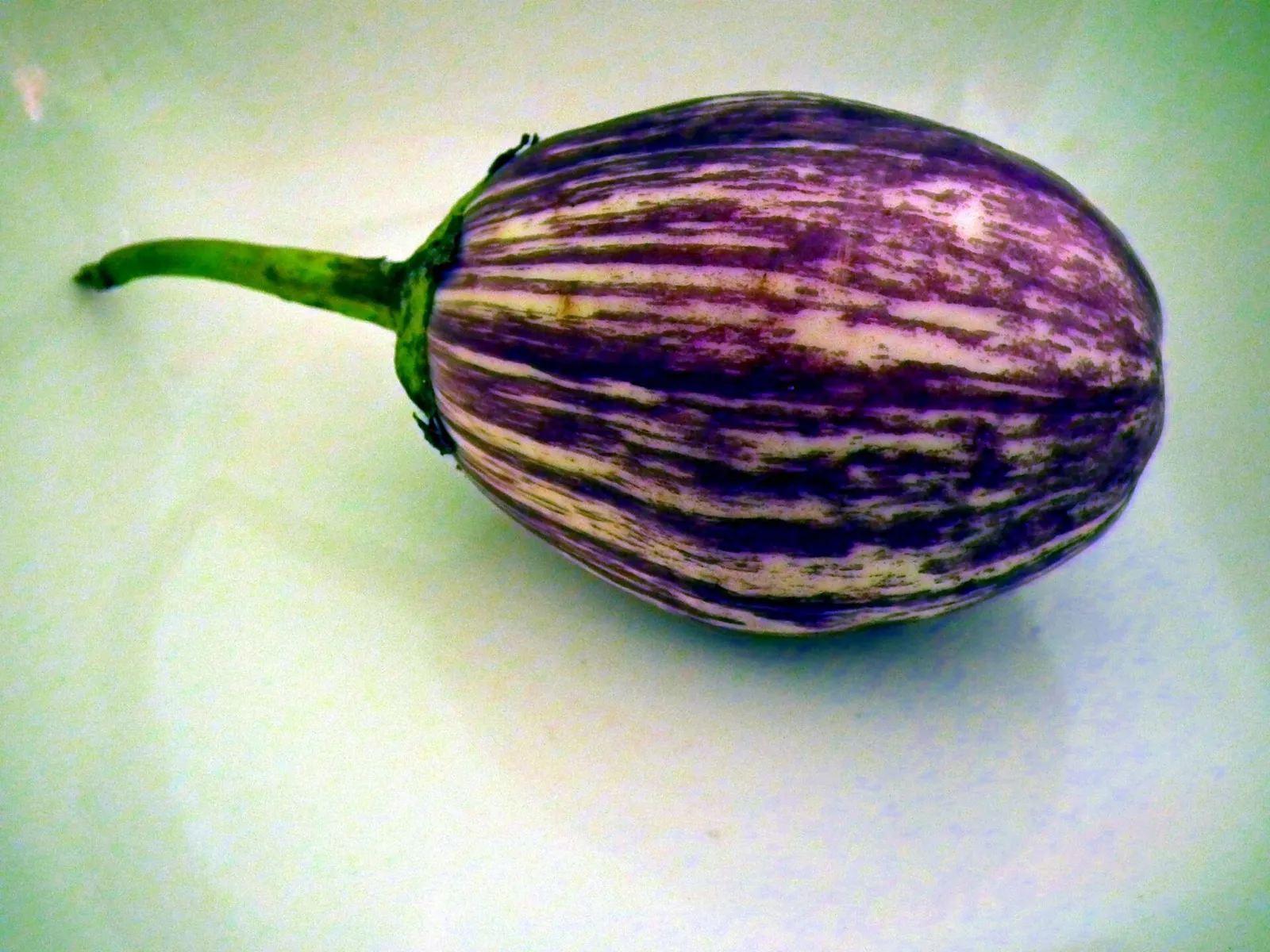
- Glossy skin. A ready eggplant has smooth, shiny, reflective skin. Penn State and UMN Extension both say to pick while the skin is still shiny and firm. Once it goes dull, you waited too long.
- The press test. Press the side gently with your thumb. Clemson Extension says that when the indentation springs back, the fruit is ripe. If the dent stays, it is overripe.
- Full color, before dull. The fruit should show full, even color for its type, but the surface should still gleam. Bright and glossy is ripe. Flat and dull is past it.
If you are not sure, pick it. Eggplant is best eaten young, so erring early costs you nothing.
How to harvest eggplant
Do not pull or twist. The stems are woody, and yanking tears the plant.
University of Minnesota Extension says to clip the fruit off with sharp shears, not pull it, because pulling damages both the fruit and the plant.
- Use pruners or a sharp knife. Cut the stem cleanly. Penn State Extension calls for a hand pruner or sharp kitchen knife.
- Leave about an inch of stem. Iowa State Extension says to leave an inch of stem on each fruit, with the green cap (the calyx) attached. The fruit keeps better that way.
- Wear gloves. The stems are bristly and the plant has small spines. Penn State Extension suggests garden gloves while you cut.
Harvest about once a week, sometimes twice in a warm spell, so nothing oversizes between picks.
Pick young, and keep picking
Two reasons to stay ahead of your eggplant.
First, young fruit tastes better. Penn State Extension warns that overmature fruit turns dull, the seeds go hard and brown, and the flesh becomes pithy and bitter. Iowa State agrees that overmature eggplant is dull, seedy, and tough. The window for good eating is when the fruit is still firm and shiny.
Second, picking keeps the plant working. As long as you keep removing ripe fruit, the plant keeps setting flowers and new eggplant. Let one fruit oversize on the vine and the plant slows down.
Store the fruit cool, not cold. Clemson Extension holds eggplant at about 45 to 50°F with high humidity. A standard fridge runs colder than that and can cause chilling injury, which pits and softens the skin. Use the warmest part of the fridge and eat it within a week.
Common mistake
Two mistakes ruin an eggplant harvest. Waiting for big size. A globe eggplant left to balloon past 6 inches goes bitter and seedy as the seeds harden. Iowa State Extension says pick before the flesh turns tough and the seeds set. And pulling or twisting the fruit off. The woody stem will not snap clean, so you tear the plant. Cut it with pruners every time.
Pro tip
Use the thumb press test when you are not sure. Press the side of the fruit gently with your thumb. If the dent springs back, it is ripe and ready. If the dent stays put, it is overripe. Clemson Extension treats this spring-back as the reliable ripeness cue, paired with glossy skin.
Get the spacing right next year
Crowded eggplant sets fewer, smaller fruit, and the plants shade each other into a slow, mildewy mess. Give each plant room and it sizes up fruit you can actually catch at the glossy stage.
Set eggplant about 18 inches apart in rows 30 inches apart, one plant per square foot in a square-foot bed. The plant spacing chart has the full crop list, and the Plant Spacing Calculator shows how many fit your bed.
Try it — Plant Spacing Calculator
Full calculatorExtra to cover losses (10% is typical).
You can plant
32plants
- Per row
- 8
- Rows
- 4
- Buy (incl. spare)
- 36 plants
Eggplant is one fruit in a summer rhythm. The same press-and-color cues guide when to harvest peppers, which share the same bed and the same firm-and-glossy logic.
Your next step
Eggplant is ready when the skin is glossy and firm and springs back to a thumb press, somewhere in the 65 to 80 day window. Cut it with pruners, leave an inch of stem, wear gloves, and store it cool but not cold. Pick young and keep picking.
Planting the next round? Open the Plant Spacing Calculator and set your eggplant at 18 inches so each plant has room to fruit.
Common questions
How do I know when an eggplant is ready to pick?
Look for skin that is glossy and reflective, and a fruit that feels firm. Clemson Extension says to press the side gently with your thumbnail. If the indentation springs back, the fruit is ripe. If your thumb leaves a dent that stays, it is overripe. Pick it young, before the skin turns dull.
Can you pick eggplant too early?
Almost not. Eggplant is best eaten immature, while the seeds are still soft and the flesh is tender. Iowa State Extension starts harvesting once fruit reach about 2 inches in diameter. The bigger risk is waiting too long, which makes the flesh tough and the seeds hard.
What happens if you leave eggplant on the plant too long?
The quality drops fast. Penn State Extension warns that overmature fruit turns dull, the seeds go hard and brown, and the flesh becomes pithy and bitter. University of Minnesota Extension says not to let mature fruit hang on the plant because quality declines. Pick while the skin still shines.
Should you cut or pull eggplant off the plant?
Cut it. The stems are woody and tough, and pulling damages both the fruit and the plant. University of Minnesota Extension says to clip it with sharp shears rather than pull. Leave about an inch of stem on each fruit, and wear gloves because the stems are bristly.
How do you store fresh eggplant?
Keep it cool but not cold. Clemson Extension stores eggplant at about 45 to 50°F with high humidity. A standard refrigerator is colder than that and can pit the skin, so use the warmest part of the fridge and eat it within a week. Eggplant is best used soon after picking.
Sources
Agronomic claims in this guide are checked against these primary sources.
- Growing eggplant in home gardens — University of Minnesota Extension
- Eggplant — Clemson Cooperative Extension Home & Garden Information Center
- Eggplant in the Garden and the Kitchen — Penn State Extension
- When can I harvest eggplant? — Iowa State University Extension and Outreach
Keep reading
When to Harvest Peppers (Green vs Ripe)
Bell peppers are full size and firm at green stage around 60 to 70 days, and fully ripe in red, yellow, or orange around 80 to 90 days. Here are the cues, the cut-don't-pull method, and the green-versus-ripe trade-off.
Read →When to Harvest Tomatoes (Signs They're Ready)
Tomatoes are ready about 60 to 85 days after transplant, when they are fully colored and give slightly to a gentle squeeze. Here are the cues, the twist-or-cut method, and how to ripen the rest on the counter.
Read →When to Harvest Zucchini (Best Size + Signs)
Zucchini is ready about 45 to 65 days after planting, best picked young at 6 to 8 inches long and about 2 inches thick, when the skin is glossy and a thumbnail dents it easily. Here are the size cues, the cut-don't-pull method, and why you check daily.
Read →When to Plant Zucchini (Frost + Soil Temp Timing)
Plant zucchini after your last spring frost, once the soil hits at least 60 F (ideally 65 to 70 F). Direct-sow seeds 1/2 to 1 inch deep, or set out transplants started 2 to 4 weeks earlier. Warm zones get a second fall crop.
Read →When to Plant Tomatoes (Frost + Soil Temp by Zone)
Set tomato transplants out 1 to 2 weeks after your last spring frost, once soil hits at least 60 F. Start seeds indoors 6 to 8 weeks before that frost date. Cold soil stalls them, so wait for warmth.
Read →When to Plant Swiss Chard (Spring and Fall Timing)
Plant swiss chard 2 to 4 weeks before your last spring frost, once the soil hits 40°F. Sow again 3 to 4 weeks before the first fall frost. Seeds go half an inch to an inch deep.
Read →